Two Ways to Experience Your Wedding Day: First Look vs. Traditional Timeline
There’s no single “right” way to structure your wedding day.
One of the biggest timeline decisions you’ll make is when you see each other for the first time. Some couples want to wait until the ceremony. Others choose to see each other privately beforehand and spend more of the day together.
Both options can create beautiful photographs and meaningful memories. But they create very different rhythms for the day.
We want you to understand what each one actually feels like—not just what it looks like on a timeline—so you can choose the experience that feels most like you.
The First Look: Seeing Each Other Before the Ceremony
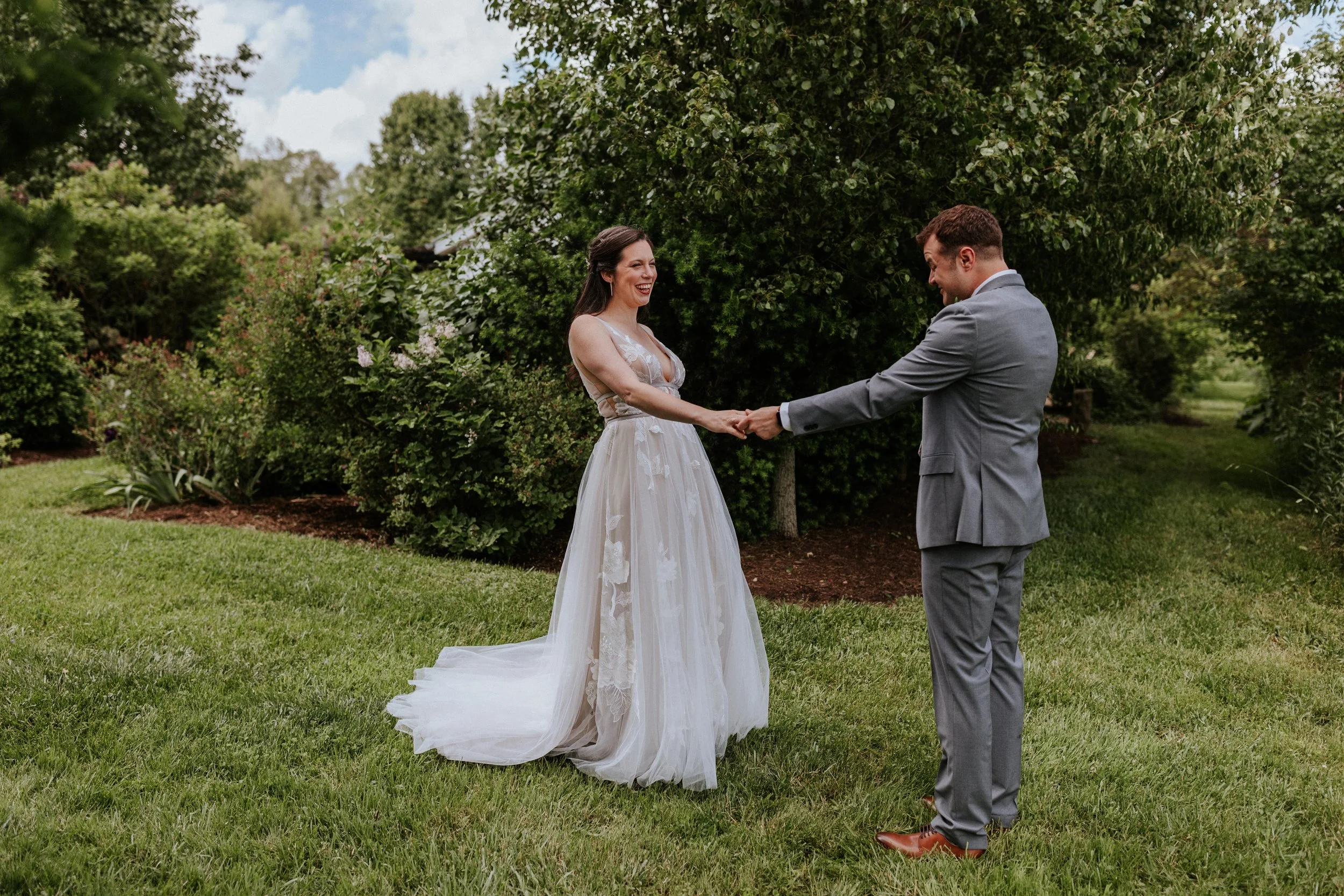
A first look creates a little pocket of time in the middle of an otherwise very busy day that belongs entirely to the two of you. Instead of the first time you see each other happening in front of everyone, you get to experience it together. You can hug, talk, laugh, cry, take a breath, and actually be together before the rest of the day unfolds.
How does a first look change the way the day feels?
The biggest difference is often how much of the day you get to experience together. Once you've seen each other, you can relax a little. You aren't waiting for the ceremony to finally see your person. You get to move through the rest of the day as a team. You can take your portraits while you're still relatively fresh, spend time with your wedding party, and then head into the ceremony with much of the formal photography already behind you. By the time the ceremony begins, you're not thinking about when you'll finally get to see each other. You're already together. There is often a calm feeling of: “Okay. We're here. We're doing this. Let's enjoy it.”
But what about seeing each other for the first time walking down the aisle?
This is one of the biggest concerns we hear about first looks: “But I want to see their reaction when I walk down the aisle.” We completely understand that. But we encourage you to think about what kind of moment you actually want to have with each other. A first look doesn't mean you don't get an emotional aisle moment. It means you get a different emotional moment before the ceremony—and then another when you walk down the aisle.
The first look is private. There are no guests watching, no ceremony happening around you, and no expectation that either of you needs to react a certain way. You can hug. Cry. Laugh. Hold each other. Say something you don't want anyone else to hear. You get to experience the moment with each other, rather than experiencing it primarily in front of everyone else.
And then you still have the ceremony.
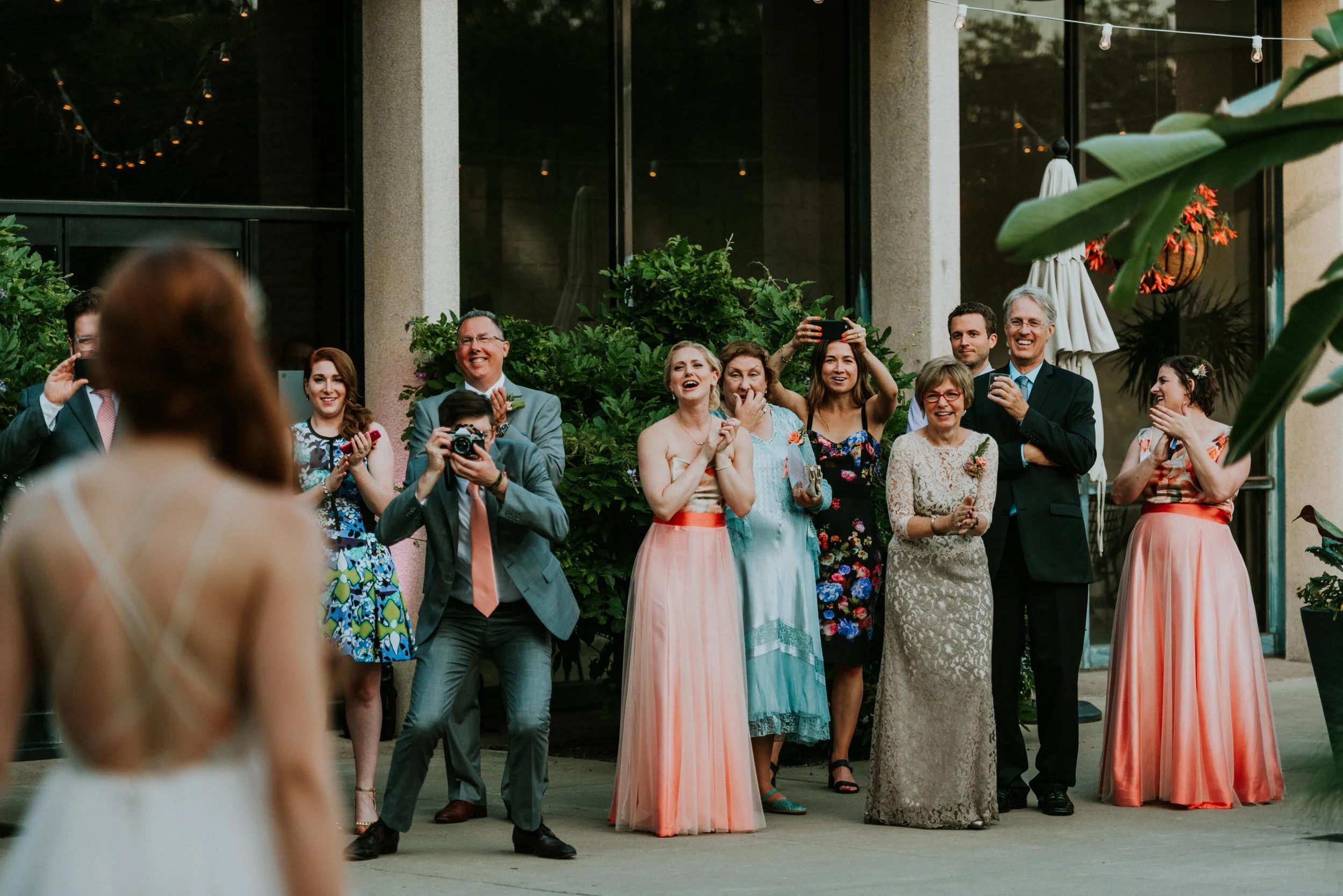
Your partner will still see you walking down the aisle. You'll still have that moment of looking at each other across the room. It just won't be the first time you've seen each other that day. For many couples, that means you don't have to choose between anticipation and intimacy.
You get both.
How does a first look affect the photographs?
Doing portraits before the ceremony gives us more flexibility with the light, location, and pace of the photographs.
We can take our time with:
Couple portraits
Wedding party portraits
Immediate family portraits
Wedding details
Creative portraits in beautiful light
A few quiet moments together before everything gets underway
Because we're not trying to fit everything into a short window after the ceremony, your portraits don't have to feel like something we're rushing through to get you to cocktail hour.
And importantly, you aren't spending your entire cocktail hour taking photographs.
What does the rest of the day feel like?
Once the ceremony is over, you're married—and you can actually start enjoying your reception.
You can hug your friends. Talk to your family. Have a drink. Enjoy cocktail hour. Take a breath. Soak it all in. Instead of immediately being pulled into a series of photographs, you can move more naturally from the ceremony into the celebration. The photography has already been woven into the day rather than taking over the hour immediately afterward.

The Traditional Timeline: Waiting Until the Ceremony
There is something meaningful about the anticipation of not seeing each other before the ceremony.
You spend the morning getting ready separately, wondering what the other person is doing, and looking forward to that moment when you finally see each other at the end of the aisle.
But it's worth asking yourself:
Do you want to spend one of the biggest days of your life apart from the person you're there to marry?
What does the traditional timeline actually feel like?
With a traditional timeline, there is often a lot of intentional separation built into the day.
You get ready in separate spaces. You can't casually run into each other. You may need to avoid certain parts of the venue so you don't accidentally see one another. And as guests begin arriving, you may find yourself tucked away somewhere, waiting for the ceremony to begin.
That anticipation can certainly be exciting—but it also means you aren't necessarily free to experience the day together.
You may be surrounded by the people you love and still spend much of the morning and early afternoon separated from them, or separated from the celebration that's happening around you, simply because you're trying to preserve that first moment at the ceremony.
You might hear your friends laughing nearby but stay tucked away. You might know your partner is just on the other side of the building but not be able to go find them. You might have guests arriving and want to say hello, but need to remain hidden. There can be something beautiful about that anticipation, but it's worth considering what you're giving up to create it.
Do you want to spend those hours waiting for the wedding to begin—or do you want to be able to actually experience them?
For some couples, preserving that tradition is deeply important, and the anticipation is worth it.
For others, once they realize how much of the day they'll spend hiding away—from each other, from guests, and sometimes even from the celebration itself—they decide they'd rather share more of the day together.
A first look doesn't take away the anticipation. It simply moves the moment when you finally get to be together earlier in the day.
What happens after the ceremony?
Once you've said “I do,” the photography portion of the day begins. Depending on your family and wedding party size, we may need to photograph:
Family portraits
Wedding party portraits
Couple portraits
Reception details
Other requested group photographs
All of this is happening while your guests are waiting for you to join them.
That doesn't mean the day has to feel stressful—but it does mean that the post-ceremony portion tends to be more structured and time-sensitive.
Your photographer is watching the clock more closely because there is a lot to accomplish before the reception events begin.
How does the traditional timeline affect the photographs?
We can absolutely create beautiful portraits with a traditional timeline. The difference is time and flexibility. If your ceremony ends at 4:30 and cocktail hour ends at 5:30, we may have roughly an hour to accomplish everything.
If family portraits take longer than expected, someone is missing from the wedding party, guests start wandering into the portrait area, or the ceremony runs late, that portrait window can get smaller very quickly. And if the sun is setting, we can't necessarily move the portrait time later without changing the light. The result can be a more compressed portrait experience.
Rather than having a generous amount of time to make photographs together, we may need to work efficiently through a list of required portraits before getting you to the reception.
So what's the biggest tradeoff?
The traditional timeline prioritizes the anticipation of seeing each other for the first time at the ceremony. The first-look timeline prioritizes spending more of the day together and having more flexibility afterward.
Neither is wrong.
They're simply different priorities. The question is less about which timeline is “better” and more about: How do you want to spend your wedding day?
Why We Especially Recommend a First Look at All-Inclusive Venues
If your ceremony and reception are taking place at the same venue, this is when we especially encourage couples to consider a first look. When everything is happening in one place, it can be tempting to think, “We're already here, so we'll just do all the photos after the ceremony.”
The catch is that once the ceremony ends, there’s a lot competing for that same window of time. Family photos, wedding party photos, couple portraits, reception details, cocktail hour, guests interacting, and getting everyone ready for your entrance all have to happen before the reception really gets underway.
Suddenly, that hour between the ceremony and reception can become a pretty packed schedule.
A first look moves much of that photography earlier in the day, when you have more space and flexibility. It also means you don't have to spend the morning and early afternoon hiding away inside the very place you've gathered your favorite people to celebrate with you. You can actually be part of your own wedding day—see your friends, talk to your family, wander around, have a drink, laugh with your wedding party, and spend time together.
Then, when the ceremony is over, you're married. Instead of disappearing for the next hour to take photographs, you can get back to your people, or take a moment for the two of you.
You can walk into your reception without feeling like you've spent the last hour being pulled from one photograph to another.
From our perspective, this allows you to be fully present for your day AND have designated time for creating beautiful portraits. This option often feels more natural which means your photos look more authentic.

The Bigger Picture
It's easy to think of the first look as simply a way to “get the photos out of the way.” That's not how we see it. The first look isn't about squeezing more photography into your wedding day. It's about making space for you to actually experience your wedding day together.
Your wedding photographs will preserve the day, but the photographs aren't the day itself. The hugs you share with your parents. The ridiculous things your friends say while you're getting ready. The moment you realize, Oh my god, we're actually getting married. The quiet five minutes when you sneak away together. The champagne with your wedding party. The way your partner looks at you when you're finally alone for a moment. Those are the things you'll remember because you were actually there for them.
That's why we encourage couples to think about the timeline from the perspective of how they want the day to feel, not simply which traditions they want to follow.
So Which One Should You Choose?
If the idea of preserving the traditional anticipation of seeing each other at the ceremony feels deeply important to you, the traditional timeline may be exactly what you want.
If you'd rather spend more of your wedding day together, have your portraits finished before the festivities begin, enjoy more of your cocktail hour, and create a private moment between the two of you before the ceremony, a first look may be worth considering.
Our job isn't to choose for you.
Our job is to help you understand what each choice means for the experience of your day—and then photograph the day you've chosen beautifully.
Whatever you decide, we'll build the timeline around it and make sure you know where you need to be, when you need to be there, and how we'll make the most of the time we have.
Because your wedding day shouldn't feel like you're racing from one photo to the next.
The photographs are important. They’re all you’ll have after the day is over. But you getting to live the experience you planned is JUST as important to us.